Unmade Beds and Butterflies
Press Release: November 28, 2025 at the Museum of Unheard-of Things, Berlin.
More information about the book
Book Launch: Pictures from the opening.
Image Spaces of Memory: On the Atmospheres in Unmade Beds and Butterflies.
Between Simulation and Trace – The Gaze as Threshold
Nika Nardelli
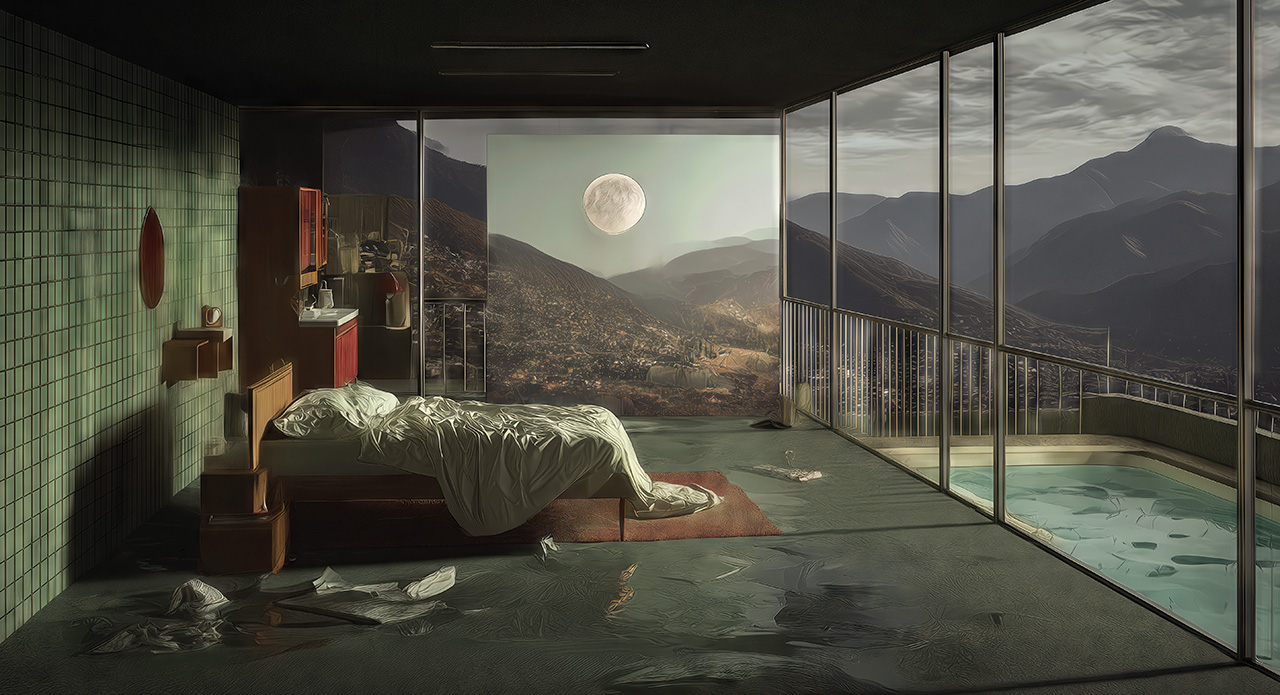
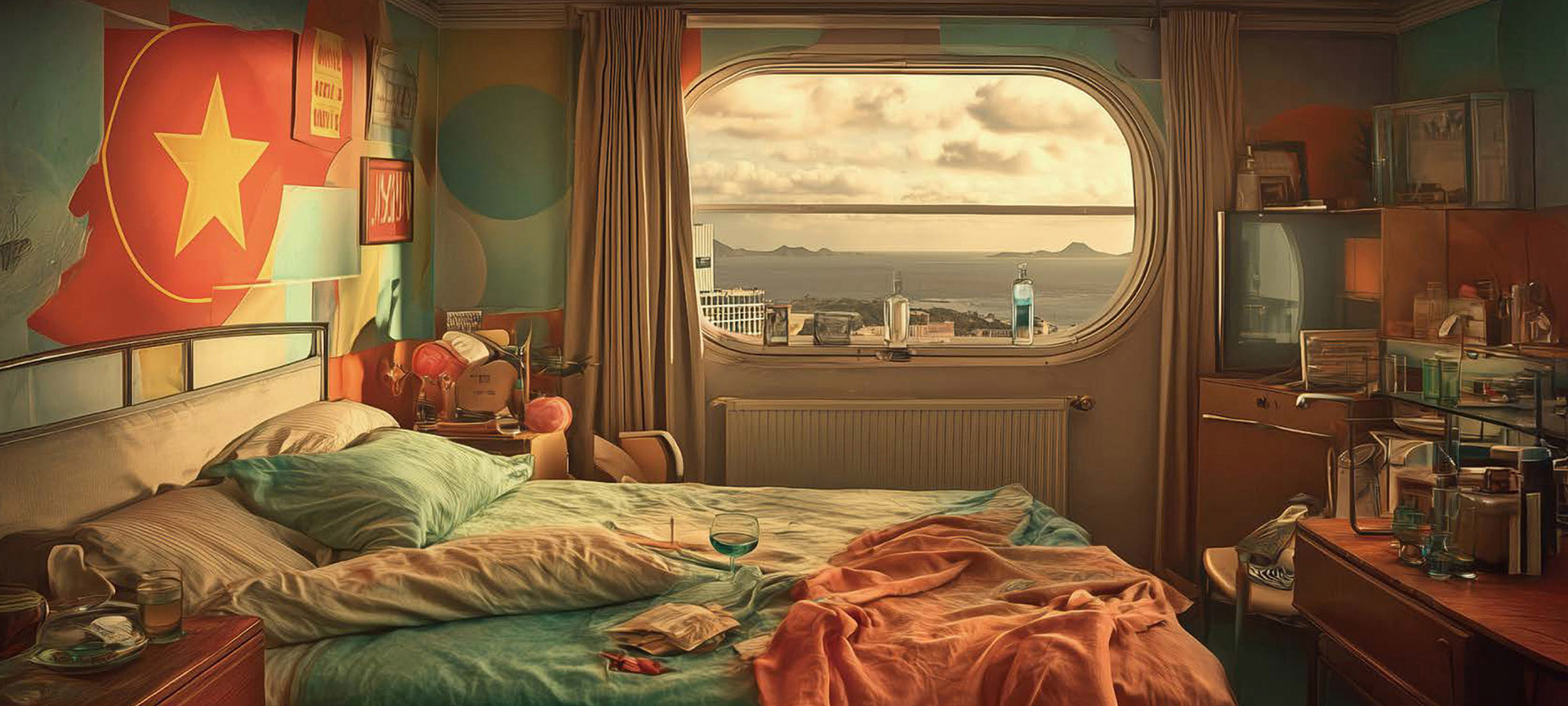
It begins with a furtive glance: a room, a bed, a window. Plants push through open frames, light grazes a rumpled blanket. Everything feels intimate, yet something unsettles. A quiet doubt emerges, as if the scene reveals more than it can be grasped—a threshold between reality and simulation, trust and disturbance. Like Pandora’s gesture, this opening is irreversible. It points to two core aspects of Markus Lehr’s work: sensual seduction and cognitive uncertainty.
The series Unmade Beds and Butterflies draws the viewer in through atmosphere rather than narrative. Familiar interiors unfold as dense emotional fields, yet their uncanny quality differs from Surrealism. Here, the strange is not born of the unconscious, but of algorithmic transformation. Based on photographs and reworked through AI, these images develop an autonomous visual logic, oscillating between reality and speculation.
Everyday objects like televisions, books, glasses appear almost inadvertently, while plants intrude as the only living elements. Their presence suggests a link to something beyond human order. This interplay of detail, intimacy, and subtle estrangement creates images that resemble memories without origin. They are not false, but eerily precise simulations of remembering that lack a subject.
The scenes gain power through omission. They appear inhabited yet remain empty, inviting questions about perception and reality. Curtains, a recurring motif, frame and obscure at once, staging a delicate choreography between visibility and concealment. Echoes of art history surface, yet the center resists revelation. No figure, no climax. Only presence through absence.
Light, space, and objects form atmospheres rather than events. These spaces feel less like places than inner states, where time dissolves and perception becomes bodily. Beds, often central, suggest traces of past presence without showing it. This subtle void activates imagination, balancing intimacy with unease.
Markus Lehr’s images operate within this tension. They attract and repel, echoing the uncanny as something both familiar and strange. The domestic becomes uncertain, like a memory revisited after years. Objects seem charged with latent life, carriers of atmosphere and meaning. Personal traces linger, yet dissolve into something more diffuse.
Ultimately, these works do not depict but suggest. They generate closeness while withdrawing from certainty. What remains is an image that feels known, though never experienced. A quiet reflection of perception in an age of simulation.
(Adapted and abridged version of the original essay in the book)